

A little old white lady clutched her purse when a Black man stepped onto the elevator, and in that one second she did more sociology than most PhD programs do in a whole decade, because she wrote his entire life off his skin, wrote the beginning, wrote the ending, and convicted him before the doors even closed, and she ain’t never even met him. Today we ain’t talking about her purse. Today we talking about who taught her how to read.
You ever been found guilty of a crime that ain’t even happened yet? Convicted by a side eye, sentenced by the clutching of a purse, no trial, no jury, no evidence but your own skin. My grandpa always said your skin is your sin, and if you Black in America you ain’t got to imagine that, that’s just a regular old Tuesday. White supremacy don’t always show up in a hood holding a torch, sometimes it shows up in a cardigan on the elevator holding the purse a little tighter, sometimes it shows up jogging past you and crossing the street, same system, different uniform.
Yancy did not invent this feeling, Black folks been living it since the auction block, but he named it with precision. In his 2008 essay “Elevators, Social Spaces and Racism,” and later in Black Bodies, White Gazes, Yancy walks us into the elevator and describes the click of the car door locks, the clutched purse, the woman who suddenly needs to stare at the floor numbers, and he argues that none of that is a private feeling, it is a learned way of seeing that whiteness rehearses so often it starts to feel like instinct. Peep the third edition of that book, released in July 2025, because it adds a whole new chapter on George Floyd, Ahmaud Arbery, Sonya Massey, and Kayla Moore, which tells you the elevator keeps getting new passengers.
Power Is Who Holds the Pen
Huey P. Newton told us that power is the ability to define the phenomenon and make it act in a desired manner, so sit with that for a minute, because power ain’t just about who got the guns and the money, power is also about who gets to define, who gets to identify, and who gets to say what a thing is before the thing ever gets to be itself.
Today’s phenomenon is what Yancy calls the elevator effect and what I call getting your whole biography written by a stranger who don’t know you from a can of paint in under a few seconds. It’s the moment a Black body enters a space and the space decides who you are before you do, the purse clutches, the door locks click, the security guard starts his little stroll behind you in the store, nobody said a word, yet a whole conversation just happened and you wasn’t allowed to talk in it.
The Ignorance Ain’t an Accident, It’s an Achievement
The system behind the purse is whiteness operating as a whole knowledge system, and the key term comes from philosopher Charles Mills: the epistemology of ignorance. Epistemology is the study of knowing, which to me is just a fancy word for how do you know what you know. If you believe Columbus sailed the ocean blue in 1492, that’s an epistemological understanding of the world, and if you believe girls wear pink and boys wear blue, that’s one too. Academia likes to throw a bunch of syllables at you to confuse you, but don’t worry, Education Is Elevation and I got you.
Mills argued in The Racial Contract (1997) that the contract requires white folks to sign on to an inverted epistemology, a structured agreement to misread the world and then call the misreading neutral, objective, common sense. Peep that. The ignorance ain’t an accident, it’s an achievement, it gets taught, funded, rehearsed, and graded, and it’s built into the intelligent design of how America perceives Black bodies.
Yancy shows us what that misknowing does to being. He describes the Black body under the white gaze through what I’m calling the ontology of surfaces, meaning whiteness looks at Black skin and believes the surface is the depth, that everything worth knowing about you is pinned onto your epidermis. Sartre said existence precedes essence, you live first and become who you are after, and Yancy says whiteness flips that script for Black folks, so essence precedes existence and the verdict arrives before the person does. Fanon felt the same thing on a train in 1952 when a child pointed and said “Look, a Negro!” and he watched himself get turned into an object in real time. The not knowing already did its homework, already prescribed a reality for you that was never meant for you, it was built to cover up for what they refuse to know.

Same Gaze, Different Sentences
Now here’s what that means for your neighbors, because you gotta make sure your neighbor is good, and this gaze don’t read every Black body the same way.
It reads Black men as threat, which is why the purse clutch. It reads Black women through what Dr. Moya Bailey named misogynoir, which is why Serena Williams told reporters at Wimbledon in 2018 that she had been drug tested more than any other top American player, male or female, five out of competition tests in the first half of that year alone, and why Black women’s pain gets dismissed in delivery rooms. It reads Black children as grown, what I call the adultification of our Black children, which is why the Georgetown Law Center on Poverty and Inequality found in 2017 that adults see Black girls as less innocent and more adult than white girls starting at age five. Five, y’all, five. Phillip Goff and his colleagues found the same thing for Black boys starting around age ten, with police overestimating their age by about four and a half years.
Tamir Rice got twelve years on this earth and about two seconds of assessment. The gaze reads Black disabled and neurodivergent folks as noncompliant, which is why Elijah McClain is not with us today. Same gaze, different sentences. That’s why I always say we need a multiplicity of Blackness, because white supremacy has different ways of texturizing Blackness, different ways of positioning Black folks and magnetizing violence onto us, and down South we bury Black trans women at rates that should make the whole country ashamed, because their Blackness and their transness and their womanness collide in front of the same gaze.
We see this in the law too. You won’t find the word slavery in the original Constitution, yet we know what the three fifths clause and the fugitive slave clause was doing, and you won’t find the word Black in it either, yet we know who it wasn’t written for. That’s whiteness at power, mapped onto legislation, mapped onto bodies, and mapped onto the phone in a white woman’s hand.
Receipt Number One: She Knew What Product She Was Ordering
May 25, 2020, the Ramble in Central Park. Christian Cooper, a Black birdwatcher and Audubon board member, asks Amy Cooper, no relation, to leash her dog in an area where leashes are required. She tells him she is going to call the cops and tell them there’s an African American man threatening her life, and then she does exactly that, and on the recording her voice climbs into panic as if somebody had laid a hand on her, and nobody did.
Now watch what she did, because this part is important and Yancy illustrates it perfectly. She announced his race first. She knew exactly what product she was ordering when she dialed 911, and she understood that the state would deliver it. Christian Cooper put it best when he told NPR she was threatening to bring the machine down on his head. Crazy how that same day, about a thousand miles west in Minneapolis, that same machine put a knee on George Floyd’s neck for over nine minutes. Same day. Same machine. Different zip code.
Here’s the receipt on the receipt. Amy Cooper was charged with a misdemeanor for filing a false report, completed five therapy sessions in a restorative program, and the Manhattan DA dismissed the charge and sealed the file in February 2021. Five sessions. Meanwhile states and cities had to write whole new laws, New Jersey, California, San Francisco’s CAREN Act, just to say out loud that weaponizing 911 against Black folks is a harm, which tells you the law never saw it as one on its own.
Receipt Number Two: Sonya Massey Dialed the Same Number
Two things can be true. 911 is a weapon in a white woman’s hand, and 911 is a death sentence in a Black woman’s hand.
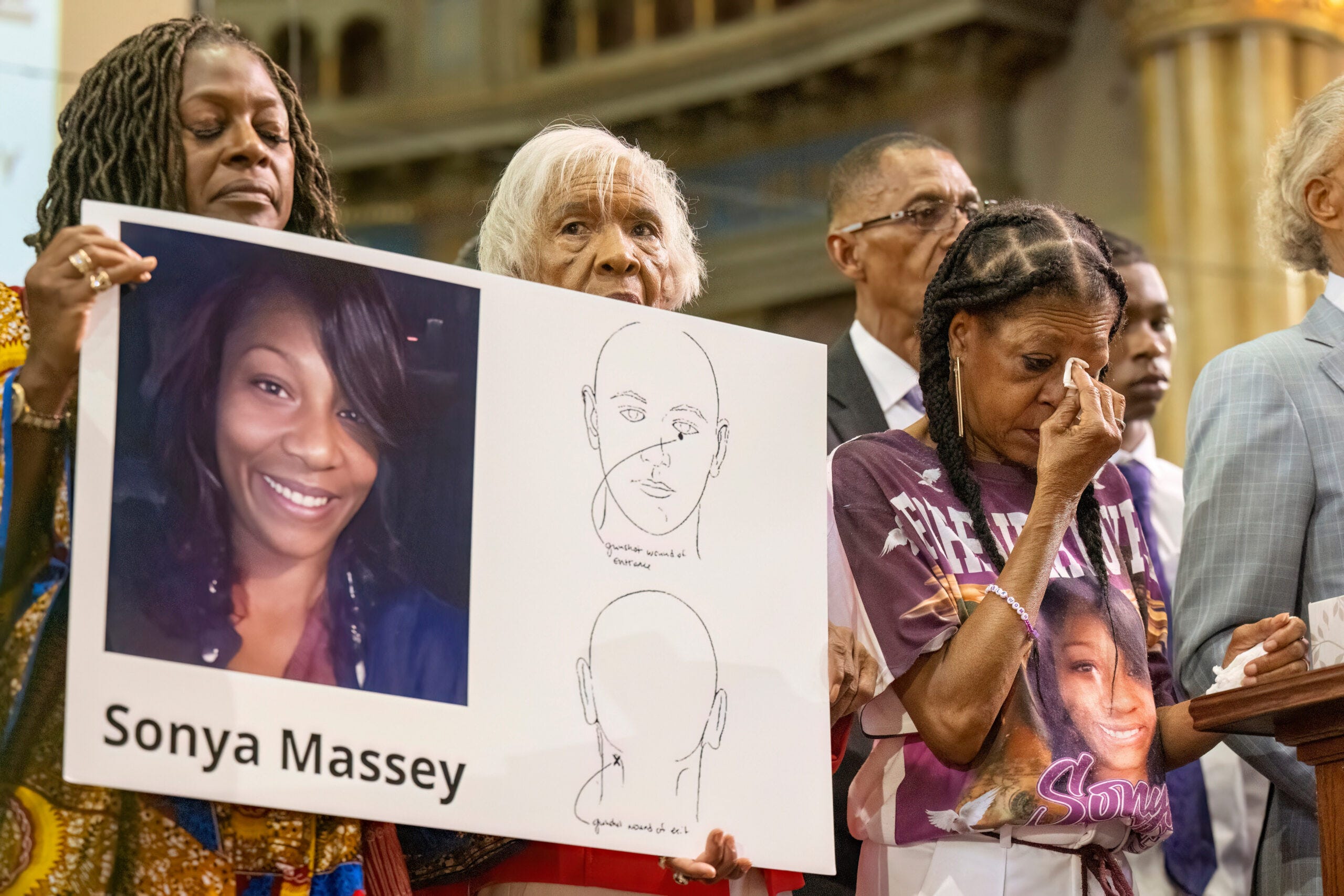
July 6, 2024, Springfield, Illinois. Sonya Massey, a 36 year old Black mother, calls 911 because she thinks there’s a prowler outside her house. Two Sangamon County deputies arrive. Inside her kitchen, she moves a pot of hot water off the stove, and Deputy Sean Grayson shoots her in the face. In October 2025 a jury convicted him of second degree murder, and on January 29, 2026, a judge sentenced him to 20 years. At sentencing, her mother Donna Massey told the court that she is now afraid to call the police herself.
Sit with the mirror image. Amy Cooper called the police and the state showed up to serve her. Sonya Massey called the police and the state showed up and read her as the threat in her own kitchen. Same number. Same dispatcher. The only variable was whose body was holding the phone. That’s not safety, that’s a racial sorting machine wearing a badge.
The Definition Ain’t Mine
Now let’s name the system. White supremacy runs on its favorite fuel, antiblackness. When I say white supremacy, I mean a synergistic system of privileges, presumptions, institutions, and enforcement that positions whiteness as the norm, the neutral, and the supreme, and that benefits white people individually and institutionally whether they asked for it or not. That’s damn near Yancy, so take it up with the academics, not me.
That’s bigger than Amy Cooper and bigger than a purse on the elevator. Who has the power? White people, individually and institutionally, wealthy and poor. Yancy is careful here, y’all. Even poor white folks catching hell from capitalism every day of their lives still walk through stores without being followed, and still get read as individuals instead of specimens. Peggy McIntosh called this an invisible knapsack of unearned assets back in 1988, and Yancy sharpens it: whiteness is an inheritance, you ain’t got to sign for it, it came in the mail anyway.
Yancy also invokes Herrenvolk democracy, a term the sociologist Pierre van den Berghe coined in 1967 for a system that is a democracy for the ruling racial group and a domination for everybody else, reminding us that America was never a democracy with racism sprinkled on top, racism was the recipe.
The Body and the Flesh
So who pays the cost? Black bodies, paid in flesh. Apply Spillers right here. Hortense Spillers, in “Mama’s Baby, Papa’s Maybe” (1987), distinguishes the body, which the law sees and protects, from the flesh, the zero degree of social conceptualization, where personhood gets stripped and a human being becomes raw material for other people’s meanings. Whiteness issues white folks bodies and assigns Black folks flesh.
That’s why the cost ain’t just hurt feelings on an elevator. The cost is material. The cost is a jail cell. The cost is a knee on your neck for over nine minutes while bystanders beg. The cost is being denied a position or a resource because of a microaggression in an office that nobody wrote down. The trick is that a manufactured hierarchy presents itself as nature, as just the way things are, and then Mills closes the loop: under the epistemology of ignorance, the not knowing is load bearing, the system produces white folks who genuinely cannot see it, and then it points at their sincerity as proof that nothing is there.
Essence Preceded Existence in Money, Mississippi
Willful ignorance gets the benefit of the doubt in this country, unless you a Black child. Emmett Till was 14 years old, a baby from Chicago, when Carolyn Bryant accused him of advances in her husband’s store in Money, Mississippi, in August 1955. In 2008 she told historian Timothy Tyson that part of her story was not true, and when his book The Blood of Emmett Till made that public in 2017, the country had to sit with the fact that a white woman’s testimony had been enough to end a child’s life.
Peep the mechanics. His accusers never had to prove he was a threat. His skin testified against him. An all white jury took about an hour to acquit, and one juror said they’d have been faster if they hadn’t stopped for a soda. Essence preceded existence. Four months later, protected by double jeopardy, Roy Bryant and J.W. Milam confessed to the murder in Look magazine and got paid for the story. The confession was the content, the content was the commodity, and Emmett’s family had to live with that for the rest of their lives.
That ain’t ancient history either. Illinois Governor JB Pritzker signed a law on July 23, 2026, making July 25, Emmett’s birthday, Emmett Till Day across the state, and he signed it at Roberts Temple Church of God in Christ, the same church where Mamie Till Mobley opened that casket so the world could see. Mamie understood the gaze better than anybody, so she turned it around and made the country look at what it did.
The Spectator Is a Member
Now go to Yancy’s hardest bar, the one that won me a lot of college debate rounds. As a former college policy debater, if your school got a football team, I probably made a living intellectually whooping its debate team with this exact impact, so if you’re asking why whiteness matters and how it touches anything in real life, here it go.
Yancy argues that the white spectator who watches and refuses to protest becomes part of the violence itself, indistinguishable in effect from the one who tied the noose. Thousands of white folks attended lynchings like county fairs, with photographs, postcards, and souvenirs. Historian Amy Louise Wood shows in Lynching and Spectacle that the crowd was not a side effect of the lynching, the crowd was the point, because watching together is how a white community taught itself that it was white, that it was innocent, and that it was in charge. The camera didn’t record the ritual, the camera was part of the ritual.
We know that being a spectator is what a lot of judges call my homeboys and family members when they catch a case: an accessory. If you were in proximity to the crime and you didn’t stop it, the state says you guilty too. The monstrosity of white supremacy says that if you ain’t the one who tied the noose, you can take pictures, sell the postcard, and monetize the violence without being accountable for it, and that ain’t equal protection under the law. Self consciously signing the contract is not a requirement for membership. Let that hang. Let that marinate in your spirit. You ain’t got to light the fire. Standing there warming your hands is enough.
Superpowers on Demand
A grown, armed, trained officer, Darren Wilson, described 18 year old Michael Brown to a grand jury in 2014 by saying he felt like a five year old holding onto Hulk Hogan, and that Brown looked like a demon. Under oath. Accepted as reasonable. That’s the monstrosity of the Black body, and that is exactly what the subconscious is whispering when somebody clutches a purse on the elevator: the Black body doing its oldest job, transforming an unarmed teenager into a supernatural threat so that killing him reads as self defense. Crazy how the Black body only gets superpowers at the exact moment somebody needs to exterminate it.
Doing Philosophy in a Chokehold
Twenty three years old. Massage therapist. Anemic, so he wore a ski mask to stay warm walking home with an iced tea in August 2019 in Aurora, Colorado. Somebody called 911 and said he looked sketchy. Elijah McClain told the officers he was an introvert and asked them to respect the boundaries he was speaking.
Listen to that sentence. That man was doing philosophy in a chokehold, asserting his autonomy, his depth, and his personhood in real time, and they couldn’t hear him, they refused to hear him, because whiteness had already decided that the surface was the whole story. The ontology of surfaces don’t take testimony from the deep.
Now look at the ledger. Officer Randy Roedema got 14 months in jail. Paramedic Peter Cichuniec was sentenced to five years, and in September 2024 a judge converted that to probation and he walked out. The people of Aurora paid the McClain family a $15 million settlement in 2021. So the gaze made the mistake, the badge carried it out, and the taxpayers covered the tab. That ain’t accountability, that’s a subscription.
Her Caution Is His Costing
Somebody gon’ say: “She was just being cautious, she’s a white woman alone.” Two things can be true, so let’s talk about crime statistics. If she was clutching that purse based on data, she would clutch it hardest around the people statistically most likely to hurt her, and the Bureau of Justice Statistics found that from 2012 to 2015, 57 percent of violent victimizations of white people were committed by white offenders, and most violence against women comes from people they know. Statistically, the threat is her cousin, her daddy, or her brother, not Christian Cooper.
The fear ain’t data driven, it’s curriculum driven. Whiteness taught her that fear, drilled it, rehearsed it, and then handed her a phone that turns the rehearsal into an armed response. Her caution is his costing. That’s not safety, that’s a subsidy, and it’s paid for by Black bodies that are always already scripted as criminal.
Prejudice Is a Feeling, Racism Has a Government
For those of you about to type “not all white people” in the comments, “I never owned slaves, I never called the cops on anybody,” Yancy already answered you with a lynching photograph: the spectator who watches and says nothing speaks through his silence.
Some of y’all gon’ say, “Conscious Lee, Black people profile too, everybody’s a little prejudiced.” For y’all I say this: prejudice is a feeling, racism is a feeling with the government behind it. When Amy Cooper performed fear, an armed state apparatus stood ready to make her fiction real, and when a Black person side eyes somebody, ain’t no institution mobilizing behind that. Yancy is precise here: the white imaginary without infrastructure would just be empty ideas. It’s the courts, the police, the banks, and the schools that turn imagination into incarceration. Symmetrical feelings, asymmetrical firepower.
Let me be clear about what I’m not saying. I’m not saying every individual white person is a villain. I’m making an analysis about patterns and trends. If you was raised around ostriches and told me birds can’t fly, I’d say that’s a cool personal experience, but it does not negate the data. Birds, in fact, do fly.
The Hall Monitor Learned to Read in Kindergarten
The elevator has a classroom version, and it opens at five years old. Jamilia Blake, a Texas A&M professor in College Station, right down the road from where I grew up in Bryan, coauthored that 2017 Georgetown study showing adults see Black girls as needing less nurturing, less protection, and less comfort than white girls the same age. The same report noted Black girls were under 16 percent of girls in school but 28 percent of girls referred to law enforcement and 37 percent of girls arrested at school. That’s the purse clutch with a hall pass.
Apply Annamma here. Subini Ancy Annamma’s The Pedagogy of Pathologization follows disabled girls of color through schools and into juvenile lockups and shows how the school reads their bodies as problems before it reads their needs, so a girl who is anxious gets read as defiant, a girl who is processing gets read as noncompliant, and a girl who needs support gets a referral. That’s Yancy’s ontology of surfaces wearing a lanyard. It’s the same read that killed Elijah McClain on a sidewalk, introvert read as resistant, a boundary read as a threat, only in school it starts with a write up instead of a chokehold.
So teachers, notice who in the group is shouldering all the labor and who is getting a grade for other people’s work, notice whose quiet you call focused and whose quiet you call attitude, notice which kid you send to the office for the same thing you let the other kid slide on. The gaze ain’t just a cop thing. It’s a lesson plan.
The Delivery Room Has an Elevator Too
When I said Black women’s pain gets dismissed in delivery rooms, I meant it as a receipt, not a metaphor. The CDC reported that in 2023 Black women died of maternal causes at 50.3 deaths per 100,000 live births compared to 14.5 for white women, a gap of almost three and a half times, and that gap widened even as white maternal deaths fell.
Apply Dána Ain Davis here. In Reproductive Injustice (2019), Davis names obstetric racism: the way medical staff read Black women’s bodies through the same surface logic, as stronger, as exaggerating, as less in need of care, so the gaze literally decides who gets believed about her own pain. A 2016 study in PNAS found that about half of the white medical students and residents surveyed held at least one false belief about biological differences between Black and white people, like Black skin being thicker, and those who held those beliefs rated Black patients’ pain lower. That’s the elevator effect with a stethoscope.
Come back to Serena, because it’s the same woman twice. The most tested player on tour in 2018 had, months earlier, nearly died after giving birth to her daughter when she told staff she was having a pulmonary embolism and had to push to be taken seriously. Surveilled when her body was winning, doubted when her body was dying. That’s misogynoir as a schedule. Then look again at Sonya Massey, a Black woman in a mental health struggle in her own kitchen, read as a threat by a man she called for help. The gaze don’t just see race. It sees race, gender, disability, and class at once, and it gives each combination its own sentence, which is why Spillers’ flesh is never abstract for Black women, it’s an intake form.
They Be All Up in the Kool Aid and Don’t Know the Flavor
Secondly, I’m not saying Black folks are just passive victims of the gaze with no interior of our own. Yancy himself honors the counter semiotic systems Black folks built, the churches, the music, the language, the freedom dreams, whole worlds of meaning constructed behind the veil where the gaze can’t even see.
Elizabeth Alexander called this the Black interior, the inner life, the imagination, the private language that exists beyond what white folks think they’re looking at. It’s the reason we say they be all up in the Kool Aid and don’t know the flavor. The gaze is powerful, but it don’t know everything, it has never been total, and it has never been universal no matter how hard they try to hoodwink and bamboozle us into believing that the way they see the world is the way the world is. That’s why Du Bois gave us double consciousness in 1903: he understood the criminality the white gaze puts on our bodies, but he also knew how we see ourselves still matters.
The Paperwork of Refusal
So what’s the alternative? For white folks watching, Yancy’s word is that whiteness is an inheritance you do not have to accept, so start the paperwork of refusal. That means marking the unmarked. Notice when you are not followed in a store. Notice when your fear spikes in a hallway, and ask who taught you that. Notice who in the meeting gets listened to and who gets talked over, and interrupt it in real time, out loud, in the room where it happens, not in the group chat afterwards and not when you feel a little remorse and want a pat on the back. Spectator silence is membership. Cancel that membership. Your discomfort at being named white for the first time is a fraction of a fraction of what it costs to be named Black every day since 1619.
For my folks, keep building the counter semiotics. Keep looking back at the white gaze. The gaze wants us flat, a surface of hieroglyphics somebody else gets to read, so every time we insist on our depth, our contradictions, and our joy, and refuse to perform for nobody, our rage don’t need an apology, our study and our organizing is ontological work, proof that essence does not precede existence, that we exist first, loudly, and define ourselves after on our own terms. If Huey said power is the ability to define the phenomenon, then liberation is snatching the pen back and writing our own stories.
For all of us, individual awareness without institutional change is a spa day. The purse clutch is downstream of the redline, the sentencing disparity, and the school funding formula. So think differently and act differently: support policy that defunds the infrastructure of the white imaginary, organize where you are, and put your minutes and your money where your mouth is.
The little old lady clutched her purse because the system taught her to read wrong. The best job for all of us is to teach the world to read again.
See, Yancy reminds us that whiteness wrote a script and called it nature, and Mills teaches us that the racial contract required white folks to agree not to know what they wrote.
Five Takeaways
The elevator effect is a reading, not a reflex. Yancy shows the purse clutch is learned perception that whiteness rehearses until it feels like instinct, and Mills shows the misreading is maintained on purpose.
911 sorts bodies. Amy Cooper (May 25, 2020) called and the state came to serve her; Sonya Massey (July 6, 2024) called and the state shot her. Grayson got 20 years on January 29, 2026, and her mother now fears calling police.
The gaze hands out different sentences. Black men read as threat, Black girls read as grown from age five (Georgetown, 2017), neurodivergent folks read as noncompliant (Elijah McClain), Black mothers read as exaggerating (50.3 vs 14.5 maternal deaths per 100,000 in 2023).
The spectator is a member. From lynching postcards to the Look magazine confession, watching and profiting without protest is participation, not neutrality.
Awareness without infrastructure change is a spa day. Prejudice is a feeling; racism is a feeling backed by courts, police, banks, and schools, so the work is defunding that infrastructure and building Black interiors the gaze cannot read.
EXPLICIT ASK TO BECOME A PAID SUBSCRIBER
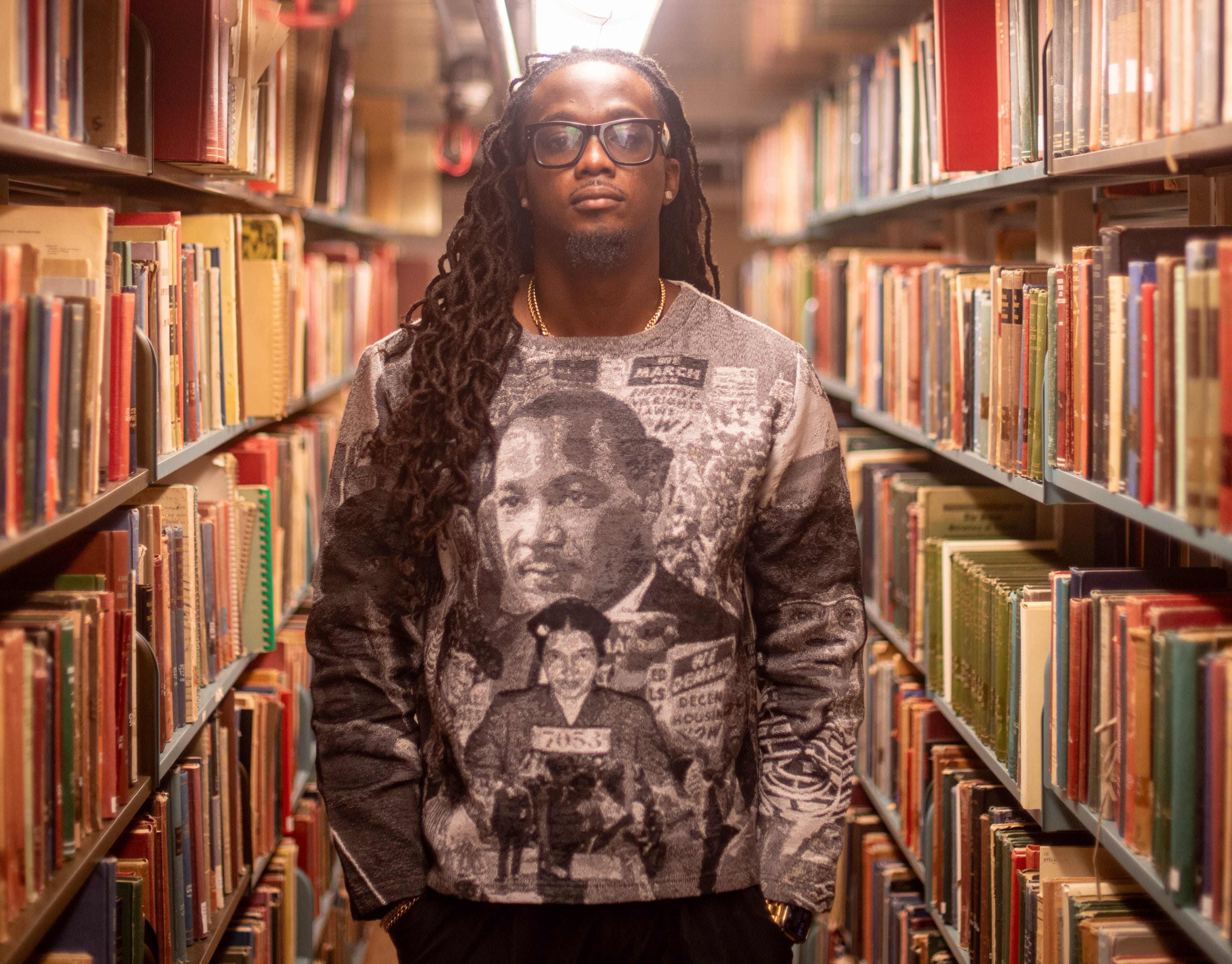
Black male educators are less than 2% of this profession—I am that 2%, and I am fighting alone against the systematic erasure of our histories, our legal protections, and our cultural truth. I’m independent with no corporate sponsor, and no safety net; this work lives or dies on the support of this community. If everyone of you reading this converted to a paid subscriber today, we would stop surviving and start building—a permanent, independent archive of Black expertise with the depth of PBS and the fire of our ancestors. So here is the ask: become a paid subscriber. Fund the fortress or watch the erasure continue; the choice is yours.
WORKS CITED/RELATED READINGS
Alexander, Elizabeth. The Black Interior: Essays. Graywolf, 2004.
Annamma, Subini Ancy. The Pedagogy of Pathologization: Dis/abled Girls of Color in the School Prison Nexus. Routledge, 2018.
Davis, Dána Ain. Reproductive Injustice: Racism, Pregnancy, and Premature Birth. NYU Press, 2019.
Du Bois, W.E.B. The Souls of Black Folk. 1903.
Epstein, Rebecca, Jamilia J. Blake, and Thalia González. Girlhood Interrupted: The Erasure of Black Girls’ Childhood. Georgetown Law Center on Poverty and Inequality, 2017. summary
Fanon, Frantz. Black Skin, White Masks. 1952.
Goff, Phillip Atiba, et al. “The Essence of Innocence: Consequences of Dehumanizing Black Children.” Journal of Personality and Social Psychology, 2014.
Hoffman, Kelly M., et al. “Racial Bias in Pain Assessment.” PNAS, 2016.
Lindsey, Treva B. America, Goddam: Violence, Black Women, and the Struggle for Justice. UC Press, 2022.
McIntosh, Peggy. “White Privilege: Unpacking the Invisible Knapsack.” 1988/1989.
Mills, Charles W. The Racial Contract. Cornell, 1997.
Newton, Huey P. To Die for the People. 1972.
Spillers, Hortense. “Mama’s Baby, Papa’s Maybe: An American Grammar Book.” Diacritics, 1987.
Tyson, Timothy B. The Blood of Emmett Till. Simon & Schuster, 2017.
van den Berghe, Pierre. Race and Racism: A Comparative Perspective. 1967.
Wood, Amy Louise. Lynching and Spectacle: Witnessing Racial Violence in America, 1890 to 1940. UNC Press, 2009.
Yancy, George. “Elevators, Social Spaces and Racism: A Philosophical Analysis.” Philosophy & Social Criticism 34, no. 8 (2008). record
Yancy, George. Black Bodies, White Gazes, 3rd ed. Rowman & Littlefield/Bloomsbury, 2025. listing
Yancy, George. Look, a White! Philosophical Essays on Whiteness. Temple, 2012.
Reporting and data
Amy Cooper charge dismissed (NPR/WGBH, Feb. 16, 2021); Christian Cooper interview (NPR, 2020)
Sean Grayson sentenced to 20 years (AP, Jan. 29, 2026); Donna Massey statement (ABC Audio, Jan. 29, 2026)
Cichuniec sentence converted to probation (CNN, Sept. 13, 2024); Roedema sentenced (CNN, Jan. 5, 2024)
Tyson on Carolyn Bryant Donham (AP, Jan. 28, 2017)
Illinois Emmett Till Day (July 23, 2026)
Serena Williams USADA testing (AP, July 1, 2018)
BJS, Race and Hispanic Origin of Victims and Offenders, 2012 to 15
CDC 2023 maternal mortality (AP/PBS, Feb. 2025)
New Jersey race based 911 law; San Francisco CAREN Act; California AB 1775


