

Thank you Lynette, Laurel Fairchild, Jen Champion, Leanna, FREEFREEPALESTINE🇵🇸, and many others for tuning into my live video! Join me for my next live video in the app.
I came in hot on Nolan Wells, and I’m not apologizing for it. On Monday, September 21, 2026, Jackson County District Attorney Angel Myers McIlrath went on Facebook with a video and a redacted grand jury report and told the public that a 23 member grand jury had unanimously returned a no true bill in the death of an eighteen year old Black boy, after 132 subpoenas and 43 witnesses. No indictments. No charges. Now peep the calendar. Nolan would have turned nineteen that same week, and the day before the announcement his mother posted that all she wanted for her birthday was a hug from her son. So I asked my cohosts straight up: is that intentional, or are we reaching?
Toya said probably coincidence, then immediately made the sharper point, which is that the timeline itself is the tactic. Investigations get stretched out until they slide out of the public purview, and once the outrage cools, in her words, a lot of tricky shit gets to happen without garnering so much outrage. That’s why she likes and shares every “we won’t forget Nolan Wells” post she sees, because she knows the intent is for us to stop making noise. Domo agreed on coincidence and then named the other trap, which is that people will go to war over intentionality while the actual evidence sits right there unread.
So let’s read the evidence, because the receipts don’t need my speculation to be damning.
The grand jury wrote that the position, the condition, the time of discovery, and the location of Nolan’s body were “consistent with drowning.” Hold that phrase. Then hold this one from the same report: the State of Mississippi Chief Medical Examiner and the family’s independent pathologist both said the cause and manner of death were undetermined, and that drowning is a diagnosis of exclusion. Undetermined. Then on Thursday, September 24, the same day we recorded, Ben Crump’s team walked through the state’s own autopsy on a press call. Attorney Liza Park said the state’s report showed no fluid or debris in the airway, no water in the lungs, no water in the stomach, and two contusions about two inches each on the back of Nolan’s head, with Dr. Roger Mitchell’s independent exam finding no white blood cells at the injury, which Park read as the injury happening shortly before he died. Forensic examiner Andrew Garrett pulled more than a million digital artifacts off Nolan’s phone, Snapchat, Instagram, GPS, Apple Health, and said he couldn’t speak to intent, but from a digital standpoint, things were deleted.
That’s why I asked it the way I asked it on air: how do you drown with no water in you? If you were found in water with none in your lungs, the most boring explanation is that you weren’t breathing when you went in. Now I’m not a pathologist, and I’ll be honest with y’all that a drowning can sometimes present without much fluid, which is exactly why the forensic folks call it a diagnosis of exclusion. Crazy how that cuts, though. A diagnosis of exclusion means you land on drowning only after you rule everything else out. The report didn’t rule everything else out. It said “consistent with,” and then it said “exonerate.”
Here’s the DA’s own line, and I need y’all to sit with it: “In addition to bringing prosecutions against the guilty, the grand jury must also exonerate those who have been falsely accused.” She also told the public that Nolan bought his own alcohol with a fake ID, that Nolan “chose to stay on the island,” and she spent a whole chunk of her statement going at Ben Crump by name. I called it legal gaslighting on the show, and I’m standing on it.
Apply Razack here. In Dying from Improvement, Sherene Razack studies the inquests and inquiries Canada holds when Indigenous people die in custody, and what she finds is that the official inquiry is not a neutral search for cause, it’s a storytelling ritual. It produces a narrative where the dead person’s own choices, habits, and pathologies explain the death, and where the institutions and the people standing nearby walk out clean, even caring. Her title is the punchline: the dead are dying from improvement, dying of their own failure to be improved by the state. Crazy how the Jackson County report reads like it came straight out of her archive. The dead boy bought liquor. The dead boy chose to stay. The friends loved him. The allegations were false. The grand jury must also exonerate. Razack would tell you that last move ain’t a side effect of the inquiry. It’s the product. The living walk out with innocence certified by the state, and the dead walk out with a story about himself he never got to contest.
This is why I said on the show, and I’m going to keep saying it, from here on out, you’re going to hear me say a lot of, this is why identity politics matter. The liberals and the left keep telling us we need to move away from identity, and I’m telling you that’s a privilege y’all can afford and we can’t. Historically, the local governments in places like Mississippi are known for covering shit up. That ain’t a vibe, that’s the archive, from Emmett Till’s acquitted killers to the three civil rights workers dug out of an earthen dam in Neshoba County in 1964. The one tool Black families used to have against the county was the federal government, specifically the Civil Rights Division at the Department of Justice, and that tool got turned around and pointed back at us. Under Assistant Attorney General Harmeet Dhillon, the Civil Rights Division joined a lawsuit against UCLA’s David Geffen School of Medicine in January 2026, issued a finding in May that it discriminated against white and Asian applicants, and sent a similar letter to Yale’s medical school. Nolan’s family has asked for an independent DOJ review. Just admit which one of those two requests this Civil Rights Division was rebuilt to answer.
Two things can be true, and Domo made sure I held both. It’s true that a 23 person grand jury heard a mountain of evidence, including testimony from the family’s own pathologist, and it’s true that “no true bill” is not the same thing as “nothing happened.” Mississippi has no statute of limitations on murder, and the report itself says a future grand jury can take up new evidence. The case ain’t closed. It’s shelved. There’s a difference, and the family knows it.
II. They Don’t See Us as People: The Panel vs. Stacey Patton
Then I pushed us somewhere most shows won’t go. A lot of folks have been running Nolan’s story through adultification, the idea that Black children get treated like adults and denied the protections of childhood. I brought Dr. Stacey Patton into the room, because in 2021 she published the sharpest rebuttal to that whole thesis, and her title said it plainly: Black children are not being killed because they’re “adultified,” they’re being murdered because they’re Black. Drawing on Toby Rollo’s work on the child/human binary, Patton argues the adultification thesis is a trap, because it perpetuates the myth of protected childhood and invites Black communities to go beg for white protection for Black bodies. Her history flips the script. White supremacy never adultified us, it did the opposite. Douglass wrote that his enslaver’s son could grow into a man while he stayed a minor his whole life. Under that logic we are, in Patton’s phrase, the children of children, permanently infantilized, irrational, correctable by force. So begging the state to see Nolan as a boy is begging for a protection that was never built for him.
So I asked the panel: can two things be true, or does this critique have teeth?
Toya took it seriously and said childhood is ultimately a question about humanity, about who gets innocence, nurture, and a future, and that those things been reserved for white children since the plantation, where a Black child’s only assigned purpose was to grow into labor as fast as possible. In her words: “Who gives a shit about innocence? Hurry up, get up, pick your shit up.” There’s never been an investment in protecting Black childhood because Black people were never granted access to humanity in the first place.
Domo said the critique stops a bit short, and he’s right. Patton is correct that the problem ain’t age, it’s Blackness, but the deeper claim underneath both frames is that they don’t see us as people at all. That’s why the world isn’t asking in unison what happened to Nolan Wells. If it was a white boy on that island, we wouldn’t be having this conversation. Then we reached for Orlando Patterson’s three constituent elements of slavery from Slavery and Social Death: gratuitous violence, natal alienation, and general dishonor. Natal alienation is the kicker here, the severing of the enslaved from any recognized lineage, so that a child belongs to no one who can legally protect him.
My piece of it was what I called the adult matrix, a time matrix. They call a grown Black man “boy” when they want him small and call a Black teenager a grown man when they want him dangerous. They move the clock on us whenever the clock is useful. This means the adultification crowd and the Patton crowd are describing the same machine from two different sides: the age was never the point. The age is a dial, and somebody else’s hand is on it.
III. The Mother Is the Jurisdiction
This is where the episode got intersectional without anybody announcing it, and I want to slow down here.
I made sure the audience knew what Nolan’s mother, Christine Wells Wonsley, has been carrying. On August 5, 2026, the Mississippi Board of Nursing opened a professional misconduct investigation against her off an anonymous complaint. Crump called it a warning shot meant to scare a grieving mother quiet, pointing out that she had a whole career with no prior complaints and the only thing that changed was that she started asking questions. The board closed it the next day. She wrote that it added more hurt to an already devastating time because she loves her job and loves her patients. Toya hadn’t even known about the harassment, and she used that to critique how bifurcated the news has become, how with Trayvon and Mike Brown we used to get every piece collectively, and now even somebody who follows closely has to get lucky and catch Don Lemon live at five o’clock on TikTok.
Then Domo raised what had been weighing on him. Wonsley wasn’t only harassed by strangers and anonymous complainants, she got criticized by Black folks online for raising her son around white people and not putting him somewhere he’d be protected. In the same news cycle, Nikole Hannah Jones published her ten year follow up in the New York Times, “In Fighting for Every Black Child, Did I Betray My Own?”, about enrolling her daughter Najya in a high poverty, segregated Brooklyn public school back in 2016, and her daughter’s own verdict that the choice cost her the education she wanted. The internet called Hannah Jones performative for choosing a Black school. The internet called Wonsley negligent for letting her son run with white friends. Domo asked the question that should haunt every one of us: where can Black parents exist?
Apply Nash here. In Birthing Black Mothers, Jennifer Nash argues that Black motherhood has become a hypervisible political category, a figure the public organizes around crisis, loss, and grief, from the Mothers of the Movement onstage at a convention to maternal mortality numbers on a slide deck. Nash isn’t dismissing that visibility, she’s warning us about what it does, which is turn the Black mother into the place where a society relitigates its own failures. So when the state can’t answer what happened on Horn Island, the question migrates to the mother. Is she a good nurse? Did she raise him around the wrong people? When a city spends decades refusing to integrate its schools, the question migrates to the mother again. Did she experiment on her own child? The mother becomes the jurisdiction. She gets the investigation the county won’t open on itself.
I called it a crazy dualism on the show, because a few months ago the timeline was chastising Black parents for sending their kids to white schools, and now it’s chastising Hannah Jones for doing the opposite. Somebody always wants to come in on the surface level like, iMa bE, “well, not every Black school is a bad school and not every white school is a good school.” Yeah, but if I tell you birds fly, you ain’t going to try to sensationalize peacocks and tell me that peacocks don’t fly. The correlation between whiteness and school funding is the rule, the exceptions are peacocks, and a Black mother is forced to choose inside the rule and then gets blamed like she wrote it.
That’s the intersection. Race decides which schools got funded. Class decides which mothers get to choose between them. Gender decides who gets blamed for the choice. Most of the fathers in both of these stories barely show up in the discourse at all.
IV. Soulja Boy Ain’t a Curriculum
Toya brought a viral video into the room: a STEM kid, eleven or twelve, thick rimmed glasses, crisp diction, whose daddy gave him two weeks to learn a Black dance, and he came back doing Crank That. Cute, sure. Toya’s read was sharper, though. That relational knowledge can’t be downloaded off YouTube. You needed to be in there messing it up and looking silly until somebody decided to teach you. She said she did Crank That in the hallways at Emporia State two years after the song came out, and she had the confidence to do it because she learned to dance with her Black friends in high school. Her prescription for parents who choose the resourced white school: you still got to go do some very, very hyper Black shit with your kids, the same way you go home and read with them. If y’all doing times tables, you also need to be building cultural literacy.
Domo pushed back, and this was the best exchange of the night. A lot of what we call Black shit, he said, is shit associated with poverty, with where we grew up. His example was the butter bucket in the fridge that you bust open and find out ain’t butter. Toya came right back: that’s a common immigrant experience. Then she offered hers, learning to sing Lift Every Voice and Sing before the Star Spangled Banner, knowing what a repast is after a funeral. Domo clarified he wasn’t saying Blackness is poverty. He was saying the reason he now has to think about his son’s cultural connection is that he no longer lives in the hood. He moved into a heavily funded school zone out in the Valley, and that very mobility is what put his son among a few Black kids. Toya granted the point, and then she named what the exchange proved, which is that when you actually hear each other out, you demystify it. For the record, I live in the Houston suburbs, Harris County, where white folks are actually the minority, so I get a mixture Domo doesn’t get out there, and that’s a class and geography question too.
Apply Carter here. In Keepin’ It Real, Prudence Carter studied Black and Latino youth in Yonkers and found that the students who did best were often the “cultural straddlers,” kids who could move between dominant cultural capital, the codes schools reward, and nondominant cultural capital, the codes that earn you standing and belonging among your own people. Carter’s intervention is that schools treat that second kind of capital as noise or deficit when it’s actually a competence, a whole second curriculum. Toya’s Soulja Boy story is Carter in miniature. The dance ain’t the lesson. Knowing how to enter the circle, look silly, and get taught is the lesson.
Then Pattillo teaches us why Domo’s point ain’t a contradiction. In Black Picket Fences, Mary Pattillo showed that the Black middle class historically lived close to, not apart from, Black poverty, sharing neighborhoods, churches, and kin networks in a way white middle class families rarely did, so much of what gets remembered as “real” Black childhood got formed in that overlap. Domo put all of us on blast with this one, too. Back in college, him, me, and Rashid used to clown the middle class, suburban dudes whose parents went to college, like they ain’t seen real niggas yet. Now he’s raising one of those suburban kids. He’s got his son skipping through the school hallways singing a song he made up, “and I’m Black, y’all, and I’m Black, y’all,” which he called childish. It ain’t childish. It’s Carter’s second curriculum, delivered by a father because the building won’t deliver it.
That’s the tie back to Nolan and to Hannah Jones. Black parents ain’t choosing between a good school and a bad school. They choosing which curriculum the state will fund and which one they’ll have to teach at the kitchen table, and then the timeline grades them on both.
Domo closed this segment with a shout out to Dr. Amber, who got dragged for saying some folks simply can’t grasp a conversation like the one Hannah Jones was having. Domo’s defense: we’re living through a post literacy crisis, a lot of adults struggle to hold multiple complex concepts at once, and it’s easier to turn it into outrage and judgment. That ain’t an insult. That’s a diagnosis. Hold onto it, because we’re about to see what a society that can’t read does with a man who lies to it on live television.
V. Moral Cowards With a Bodyguard
Thirty eight minutes into Nolan Wells, in true Chop Up form, we pivoted, and I played the opening of Benjamin Netanyahu’s September 24 speech at the 81st UN General Assembly, his fifteenth address to that body. Dozens of delegations walked out as he stepped up. His opening line: “If there are any other moral cowards who haven’t yet left this hall, please do so now.”
So I asked the room: what does it mean for the man bombing children in tents, in refugee camps, in hospitals, to call anybody a moral coward?
Domo’s answer was the thesis of the second half: “You can say anything when you got the bully at your back.” He compared it to them streamers who big body their way through a crowd, bump into people on purpose, and then sic the bodyguard on whoever pushes back. Then he refused the easy take. When folks say Israel got the United States wrapped around its finger, Domo says nah: “They useful.” Do not pretend as if our interest isn’t tied up directly in how they moving. That’s the Black radical tradition talking, the same analysis that read Vietnam and Angola as one war, and it’s more honest than the lobby only story because it doesn’t let Washington play victim.
Toya read the chat into the record. Jen: “Projection. Every word they say is a confession.” South Dakotans for Integrity: for his words to carry any weight, I’d have to have some respect for him. Toya’s own verdict: you’re not powerful, you’re a weak man hiding behind good security. Domo put it in workplace terms, like quitting and your manager yelling, “Well, you’re fired.”
Then I made the law and order argument. The International Criminal Court issued a warrant for Netanyahu in November 2024 for the war crime of starvation as a method of warfare and for crimes against humanity including murder and persecution, and, as the explainer I played on air made clear, the warrant did not charge genocide. That question lives at the International Court of Justice in South Africa’s case against Israel. Keep those straight and the argument gets stronger, not weaker, because the man is wanted for starving civilians and still tiptoed into a country whose politicians love to say nobody is above the law. Republicans say it about “illegals,” our undocumented brothers and sisters. Democrats say it about Trump and about the Epstein class. Nobody said it Thursday.
This is where Razack’s second book comes in. In Casting Out, she describes race thinking as the habit of dividing the world into those who belong inside the law and those who must be managed outside it, in camps, on lists, under suspicion. Look at how the words move. I broke it down on air: they interchangeably throw around “terrorist” and “war” while fighting the word “genocide” the whole time. When we talk about World War II, we don’t call every soldier fighting in it a terrorist, not even the Nazis, so understand that “terrorist” is racially provoking language that treats simply existing inside the war as terror. They use “war” to deny genocide, they use “terrorist” to justify total obliteration, and they use “humanitarian” to describe themselves doing it. Anybody Palestinian is Hamas, anybody who aids them is aiding terrorists, and when Netanyahu does it, he’s a humanitarian. The man with the warrant is inside the law. The people on First Avenue are outside it. The Palestinians are outside even the category of civilian.
Domo called Israel the Mississippi of the Middle East, and that lands, because it’s the same move the grand jury made on Horn Island. The powerful get a report that certifies their innocence, and the dead get a story about themselves.
VI. Mamdani, the Warrant, and the Cap We Okay With
Domo pressed the room on Mayor Zohran Mamdani. As a candidate, Mamdani promised to have Netanyahu arrested if he came to New York. As mayor, his administration reviewed it and concluded the city doesn’t have the legal authority to execute an ICC warrant, while noting the federal government does. Domo asked whether campaigning on locking him up and then turning around and saying “I can’t” hurt his credibility.
Toya, speaking as a Californian and not a New Yorker, said anybody who understood jurisdiction knew it was never a thing. It was spirited language, the accountability metric people needed to hear from somebody at the top. Then she drew the line where it belongs, because the chat did. South Dakotans for Integrity pointed out that Mamdani’s police were arresting protesters. According to reporting that afternoon, about a hundred people got arrested near the UN, including City Council members Chi Ossé and Alexa Avilés and Darializa Avila Chevalier, the Democratic nominee in New York’s 13th District, with the NYPD’s Strategic Response Group, the unit Mamdani once pledged to disband, doing the zip tying. Toya: you can’t arrest him, fine, but you can do something about your police officers arresting protesters while he’s there. That’s where she said he loses her, because you can get people riled up about what you can’t control and then not do shit with what you can.
I asked Domo straight: is Mamdani’s answer bullshit, is it pragmatic, or did he pump fake us? Domo said it’s the honest answer, and that there’s a certain level of cap we okay with during an election. He also caught something nobody else did. When the Senate was grilling Kash Patel, nobody stood up and asked, hey, FBI, y’all can arrest war criminals, right? My read was geopolitical. A city mayor was never finna buck the international order and every ally of Israel that’s also an ally of America, especially when both 2024 presidential candidates ran what I called an Israel off, competing over who was the most loyal. Domo said you can’t really say whether Kamala Harris would’ve let Netanyahu walk around freely either. I told him she would. She would. Domo agreed, and he said it plainly: ain’t nobody pretending this is an “only if Kamala” situation.
Then I played the clip of Netanyahu explaining that it’s “the opposite of genocide,” the millions of text messages, the millions of phone calls, the millions of leaflets, the two million tons of food. Domo’s whole response: “I just hate being talked to like I’m stupid.” Toya’s: “You’re not going to piss on me and tell me it’s Super El Niño.” So I supplied the receipt the clip skipped. If you been following this since October 7, every time he dropped those leaflets telling people in Gaza to go south because it’d be safe, then they bombed them in the places they were told to go. Then they double tap. Imagine your house gets bombed, the ambulance pulls up, the aid pulls up, and they bomb it again. So when he’s asking these remedial questions, these demonic questions, understand that’s the same thing massa and them used to do. What type of evil master feeds his slaves? Feeding a people you are starving and then asking for credit is the plantation’s oldest defense.
Toya dropped the vocabulary word of the night: agathokakological, made of both good and evil. The surface of the act is the leaflet and the food. The underbelly is the cat playing with the mouse, playing with its food. Toya’s point is that this is predator behavior, animal and prey behavior, and naming it that way is how you refuse the dehumanization instead of mirroring it. BK Hustler put the military math in the chat: Palestinians don’t even have a Navy or an Air Force. Toya called it an eleventh grader pummeling kindergartners and bragging about it, and reminded everybody that one person’s terrorist is another person’s freedom fighter.
Then came the second clip, where Netanyahu turned his UN address into a New York City council meeting, telling Mamdani that since his election many Jews no longer feel safe in New York, going after the mayor’s friendship with Hasan Piker and his wife’s social media likes. Imagine a foreign leader coming to a U.S. city to drag a Republican mayor from the UN podium. I said it on air and I’ll say it here: I believe wholeheartedly that a lot of the Hasan Piker obsession has been fueled by Israeli loyalists. Mamdani’s response that same day called the speech baseless lies meant to sanitize a genocide.
I’ll tell on myself a little here, because it connects. After I called out Macy Gray, she called me a know it all and then called me dumb, me, a man speaking from a master’s degree in human relations. So I know exactly what Domo meant. When somebody who can’t hold a basic argument gets up and insults your intelligence, it hits different. Stop playing with me. That’s what “moral cowards” is. It’s a man with no argument trying to insult the room into silence.
Domo said it best, we in our cartoon era, Gargamel and Cobra Commander running actual countries. The audience in the theater knows who the villain is, and the only people who don’t are the characters in the movie. That’s the scariest part of the post literacy crisis Dr. Amber and Domo named. The lie doesn’t have to be good. It only has to be loud enough, and backed by enough force, that nobody in the movie is allowed to say it out loud.
VII. “They Got Health Insurance and You Don’t”: The Whitey on the Moon Ledger
My last argument on the show was aimed at the folks who were mad about purity tests and single issues during the election. In 2026, if you still believe talking about Israel and Palestine is a single issue, you are a willing dumbass. Domo said purposely obtuse. I said an unethical dumbass. My receipt was local. The Texas State Board of Education voted on September 4, 2026 to require students to learn Israel’s 1948 founding framed as a return to an ancestral homeland, in the same year the board trimmed lessons on slavery and segregation. That has nothing to do with the federal government. That’s the Texas Education Agency spending Texas tax money deciding which history your child owes allegiance to.
Then I said the line I want on a shirt: “They got health insurance and you don’t, and we paying for it.” Under the 2016 memorandum of understanding, the United States sends Israel $3.8 billion a year in military aid through 2028. Meanwhile, the same federal government found $75 billion in new money for ICE, handed out signing bonuses of up to $50,000, and hired roughly 12,000 new officers so fast that, per a 2025 whistleblower letter, applicants were getting cleared without fingerprints, identity verification, or credit checks. By mid September 2026, the Washington Post was reporting that ICE had quietly started firing new hires over red flags it should have caught in vetting. Toya’s words: they deputized demons on behalf of Satan himself, and now they finding out none of them are qualified.
Put those two lists next to each other and you see the whole Whitey on the Moon of it. Money for bonuses. Money for a war. Money to sue a medical school for being too Black. No money, no DOJ review, and no working Civil Rights Division for a mother in Ocean Springs asking why her son had no water in his lungs.
Toya added the part most folks missed. ICE arrests hit records this summer, 50,208 in July and 50,925 in August, while the whole country was fixated on Minnesota and LA. On air she said only about ten percent of the people arrested were convicted criminals. The real number is worse in the way that matters: according to Deportation Data Project figures reported in September, 73.5 percent of the people ICE arrested in July had no criminal conviction, and only 1.6 percent had a conviction for a violent crime. So much for the worst of the worst. Toya called it the kid with cookie crumbs all over his face. Red handed.
Then there’s Kash Patel, and I had to put y’all on. At a September 15 Senate Judiciary hearing, the FBI director defended quietly changing hiring rules so that prostitution and bestiality are no longer automatic disqualifiers, saying the bureau didn’t want to punish victims of bestiality. Who are y’all talking to? The victim of bestiality is the dog. Two days later, on September 17, Patel named Shaquille O’Neal an honorary FBI special agent at the National Academy graduation, and when a homie of mine out here in Houston made a video calling Shaq out for cozying up to this FBI, Shaq slid in his DMs, told him he heard he was a broke boy, and told him to enjoy his apartment. Terrell Owens told Shaq to give the badge back. Domo: everybody collecting honorary badges like Thanos collecting stones.
Crazy how the federal government can find context and nuance for an FBI applicant’s past, context for an ICE hire’s past, and context for a war criminal’s present, and has zero context for a Black eighteen year old’s last day alive. The benefit of the doubt is a budget line. We just ain’t on it.
VIII. Ambient Fascism and a Boy Singing in the Hallway
Near the end Toya shared a post from Maxim, Mr. Hot Sauce himself, the man behind the scenes: we live in a state of ambient fascism, and the sociopolitical weight of an unknown future weighs on you even if you aren’t aware of it. Toya unpacked it like the teacher she is. Ambience is background. You work to it. Sometimes you sleep to it. It’s undiscerning, unthreatening, benign. Now imagine good old fashioned fascism running at its best with that ambience as cover. She also warned that a lot of what’s in Trump’s bag lands in 2027, the Easter eggs after the credits. Don’t wait for a blue wave. The movie ain’t over.
Domo said he’s only 38 and doesn’t want to pretend it’s never been this bad, but the facade is gone. We showed up in Kosovo and told ourselves all the fucked up stuff was a means to an end, that we was protecting democracy, policing the world. After welcoming the criminal with open arms, there’s no legs left for American exceptionalism to stand on. We are officially the bad guys. We always was. He said he’s not appalled, he’s irritated. Outraged at the genocide and the loss of life. Irritated at the lying.
This is where the Afropessimist line we ran through the middle of the night has to meet its counterweight, because the machine ain’t the whole story. Apply Perry here. In Breathe: A Letter to My Sons, Imani Perry writes to her two boys as a Black mother who knows exactly what the world has in store for them and refuses to raise them inside that fear alone. She doesn’t promise them safety. She promises them an inheritance, a lineage of Black people who knew the machine and made beauty, argument, and joy anyway. In May We Forever Stand, her history of Lift Every Voice and Sing, Perry shows how that song, the same one Toya learned before the Star Spangled Banner, carried a whole counter citizenship through segregated schools, churches, and graduations, so Black children were formally initiated into belonging to each other even when the nation refused to claim them.
That’s what Domo’s son is doing skipping through the hallway of his school singing “and I’m Black, y’all.” That’s what Toya meant by knowing what a repast is. That’s what the Chop Nation chat is doing every Thursday when Jen and BK Hustler and South Dakota and FBA’s Defense and Brandon and Jim and JM show up and talk back. Patterson called it natal alienation, the severing of the child from any lineage that could protect him. The song is the rebuttal. Lineage ain’t granted by the state. It’s sung into a child by the people who love him. The state can shelve a case. It cannot shelve a song.
5 KEY TAKEAWAYS
“Consistent with drowning” is not “cause of death: drowning.” Both the state medical examiner and the family’s pathologist listed Nolan Wells’ cause and manner of death as undetermined, and the state’s own report found no fluid in his airway, lungs, or stomach. A no true bill is not an acquittal, and Mississippi has no statute of limitations on murder.
The official inquiry is a genre. Sherene Razack shows how inquests produce innocence for the living and pathology for the dead. The Jackson County report’s own language, that the grand jury must also exonerate, is the genre announcing itself.
When the state won’t answer, the mother gets investigated. Christine Wells Wonsley faced an anonymous nursing board complaint; Nikole Hannah Jones faced the timeline. Jennifer Nash’s work explains why Black mothers become the place a society relitigates its failures.
The law has a direction. A man with an ICC warrant spoke at the UN and went home; about a hundred protesters were zip tied outside. ICE hired 12,000 without full checks and arrested record numbers, with 73.5 percent of July arrestees having no criminal conviction.
Lineage is the counterweight. Prudence Carter’s “cultural straddlers” and Imani Perry’s history of Lift Every Voice show that Black parents are running a second curriculum at home, and that it works.
BECOME A PAID SUBSCRIBER TODAY
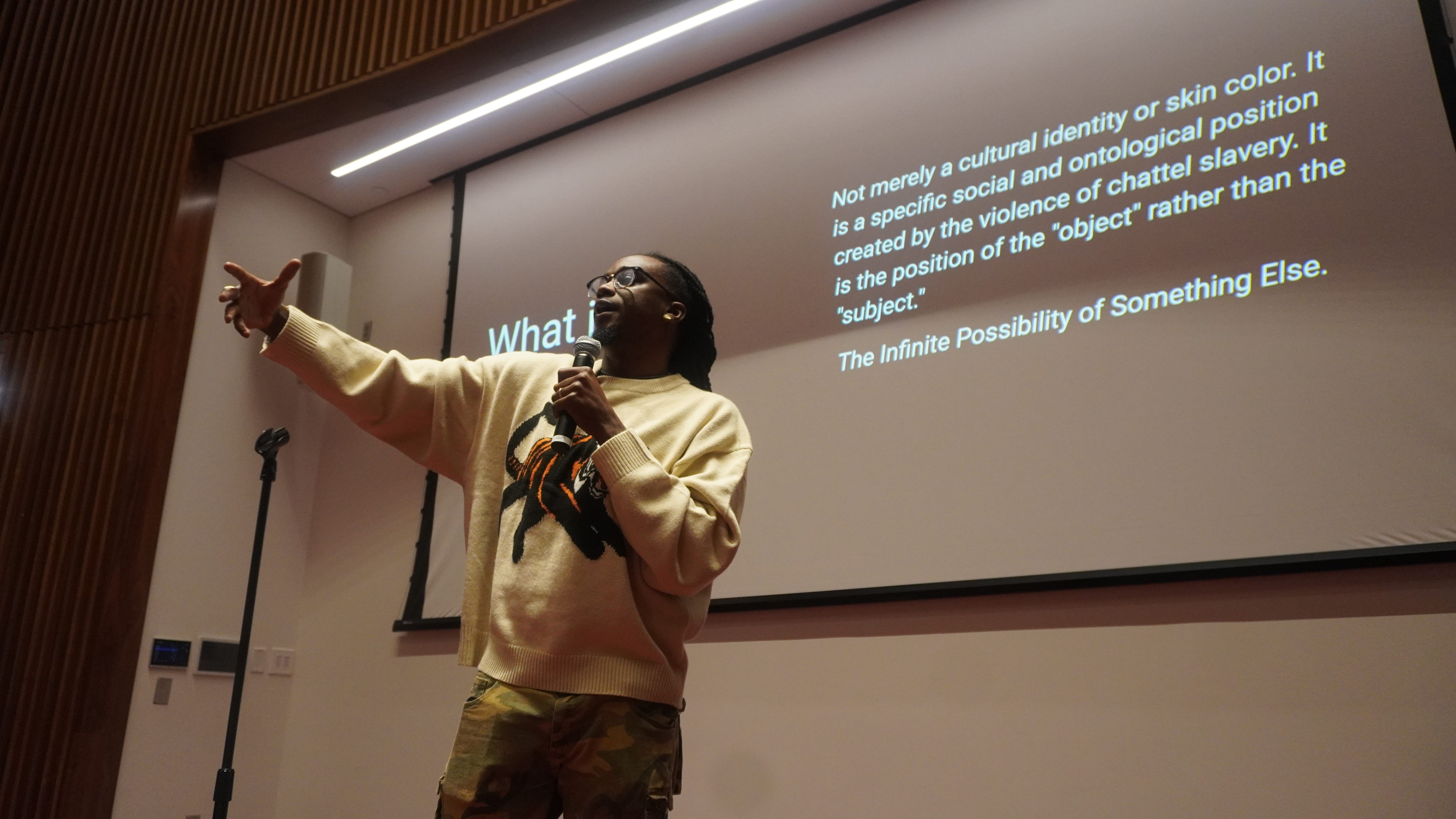
Black male educators are less than 2% of this profession, and I am that 2%. Every pack like this one is a classroom that the state won't fund and won't grade fairly. If this work has ever handed you the receipt you needed at the dinner table, in the group chat, or in the city council meeting, become a paid subscriber today. Fund the fortress or watch the erasure continue.
WORKS CITED
Razack, Sherene H. Dying from Improvement: Inquests and Inquiries into Indigenous Deaths in Custody. University of Toronto Press, 2015.
Razack, Sherene H. Casting Out: The Eviction of Muslims from Western Law and Politics. University of Toronto Press, 2008.
Carter, Prudence L. Keepin’ It Real: School Success Beyond Black and White. Oxford University Press, 2005.
Pattillo, Mary. Black Picket Fences: Privilege and Peril among the Black Middle Class. University of Chicago Press, 1999.
Nash, Jennifer C. Birthing Black Mothers. Duke University Press, 2021.
Perry, Imani. Breathe: A Letter to My Sons. Beacon Press, 2019.
Perry, Imani. May We Forever Stand: A History of the Black National Anthem. University of North Carolina Press, 2018.
Patton, Stacey. “Black Children Are Not Being Killed Because They Are ‘Adultified;’ They’re Murdered Because They’re Black.” MadameNoire, June 3, 2021.
Patton, Stacey. “The Children of Children: Why the Adultification Thesis Is a Misguided Trap for Black Children and Families.” In Trust Kids!, ed. Carla Bergman. AK Press, 2022.
Rollo, Toby. “The Color of Childhood: The Role of the Child/Human Binary in the Production of Anti Black Racism.” Journal of Black Studies 49, no. 4 (2018): 307 to 329.
Patterson, Orlando. Slavery and Social Death: A Comparative Study. Harvard University Press, 1982.
Douglass, Frederick. My Bondage and My Freedom. 1855.


